
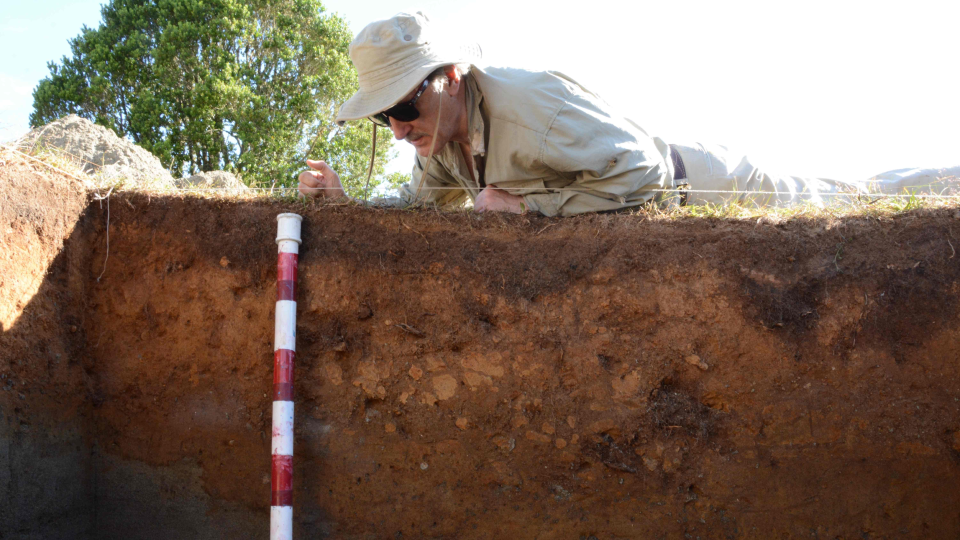
A controversial study published in the journal Science in March claimed that Monte Verde, a 14,500-year-old Paleo-Indian archaeological site in Chile that is one of the oldest human occupations in the Americas, was actually only 8,200 years old. But in a collection of three scientific letters published last week, 30 experts have critiqued the study’s “substantive errors and misrepresentations” and asserted that the study’s claims are “categorically false and found to be unsupported.”
Monte Verde, located in the mountains of southern Chile, was discovered in 1976. Tom Dillehay, an archaeologist at Vanderbilt University who has led the excavations at the site for nearly 50 years, recovered stone tools, preserved wood, bones and skin of extinct animals, a human footprint, edible-plant remains, hearths and natural rope. The occupation of the site, sometimes called Monte Verde II or MV-II, was carbon-dated to 14,500 years ago, making it the only securely dated Late Pleistocene archaeological site in South America.
“The so-called 14,500-year-old archaeological component that was supposed to forever change our understanding of the colonization of the Americas actually comes from a landform that’s at best 8,000 years old,” Surovell told Live Science in March.
The reactions from outside experts were swift and critical. Michael Waters, a geoarchaeologist at Texas A&M University, told Live Science in March that the study included “egregiously poor geological work,” while David Meltzer, an archaeologist at Southern Methodist University in Dallas, told Live Science in March that the researchers’ work “was not actually at the [MV-II] site” and therefore “may have little bearing on what was at the site itself.” And Dillehay promised a detailed scientific response to Surovell and colleagues’ claims would be forthcoming.
30 scientists slam stratigraphic study
Dillehay, Waters and Meltzer are each the first author on a series of three scientific commentaries, or eLetters, published in Science May 4 and 5. The letters — which, along with their supplementary information, total more than 100 pages — systematically dismantle the claims made in the March study by Surovell and colleagues and refute their conclusion that Monte Verde was younger than claimed.
One of the main findings in the Surovell study was the presence of a unique layer of ash known as the Lepué Tephra, which blanketed the area after a volcanic eruption 11,000 years ago. The researchers discovered this tephra — ejected volcanic material — in several geological sections along the creek at Monte Verde and concluded that, at some point, erosion cut a channel through the site. So, while MV-II is lower in the ground than the surrounding terraces, it was actually settled on top of the tephra layer, making it younger than 11,000 years.
Dillehay and colleagues challenge this claim, writing that “based on integrated archaeological, geochemical, chronostratigraphic, and pollen data, there is no [around 11,000-year-old] Lepué Tephra below the MV-II archaeological site.” In fact, the samples that Surovell and colleagues took were from a geological layer not from Monte Verde II but characterized by a layer of fungus and an iron-oxide-rich pyroclastic bead layer.
Another reason Surovell and colleagues believe MV-II is younger than claimed is due to the complex geology of the site, which is on the banks of a creek. While their radiocarbon dating of new samples of charcoal and wood from the Monte Verde area produced dates ranging from 13,400 years to 16,500 years ago, in line with previous studies, the researchers suspected that those materials may have been washed into the site and redeposited, making the site seem older than it is.
In their eLetter, Waters and his co-authors noted that the Surovell study provided no evidence that any of the dated wood or bones had ever been moved, calling it “speculation” and writing that the “most egregious failure” of the study is that the stratigraphy they describe does not match the stratigraphy of MV-II.
“Years of previous research on and around the MV-II component has yielded numerous radiocarbon ages on artifacts and features directly from the MV-II component in support of a late Pleistocene age for the MV-II component,” Waters and his co-authors wrote.
In a third eLetter, Meltzer and his co-authors pointed out that genetic studies fully support an age of 14,500 years for Monte Verde and noted that the Surovell study makes “several questionable claims about the peopling of the Americas and how we understand that process.”
In the late 1990s, Monte Verde entered archaeology textbooks as a clear example of a pre-Clovis site, fundamentally changing the way archaeologists thought the first Americans arrived on the continent. But since then, archaeologists have discovered many other sites that predate the circa-13,000-years-ago Clovis migration, demonstrating much earlier waves of migration into the Americas.
Genetic information is an independent dataset that acts as a check on archaeological data and has shown that all ancient and present-day Native Americans trace their ancestry to three lineages: ancient Beringians (who split off circa 20,900 years ago), and northern and southern Native Americans (who split circa 15,700 years ago). The genetics therefore attest to the pre-Clovis (more than 13,000 years ago) presence of humans south of the continental ice sheets.
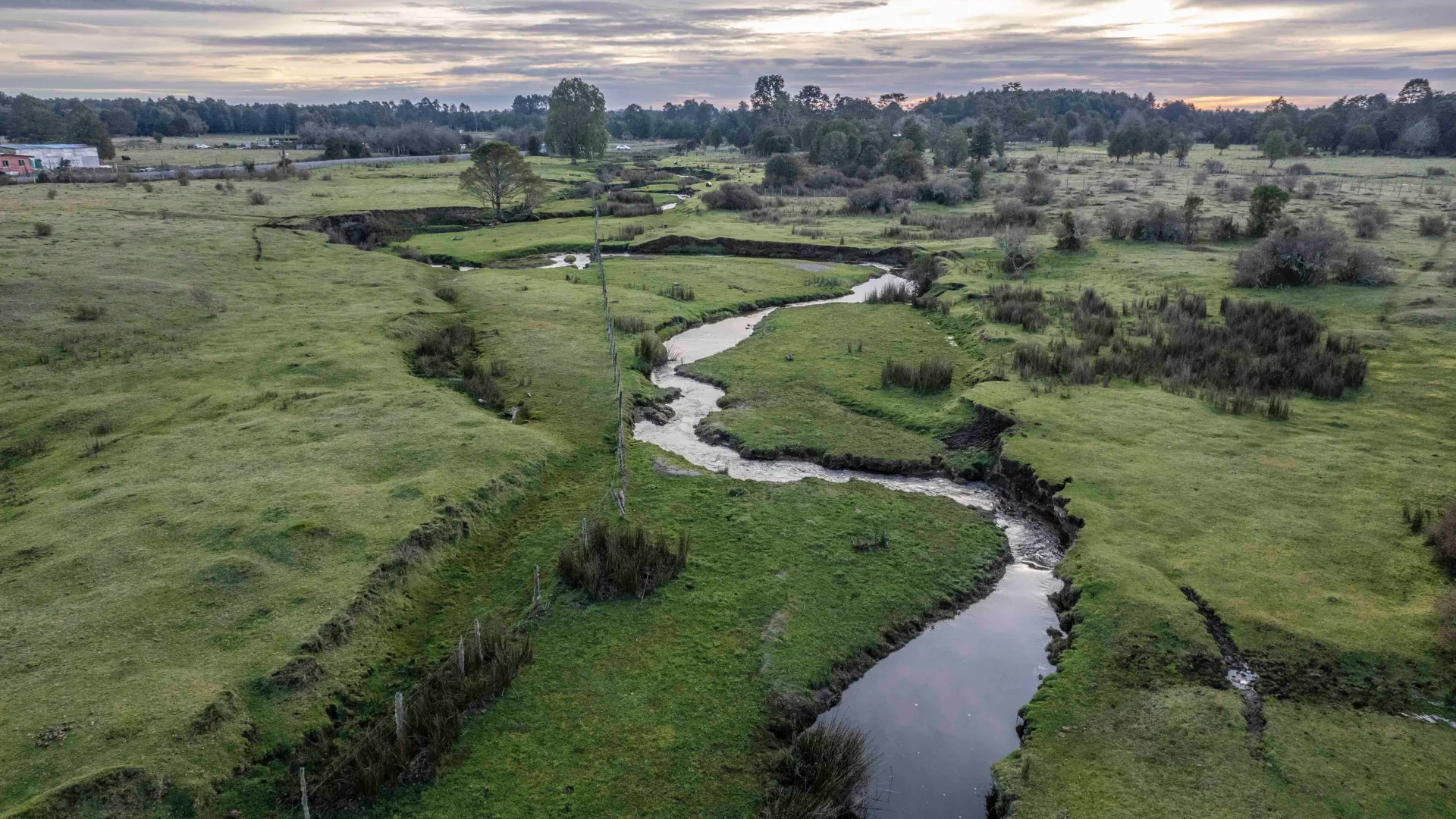
A view of the Monte Verde II site in Chile.
(Image credit: Monte Verde Foundation)
Back and forth in Science
One unresolved question is whether Surovell and colleagues’ quick survey of geological layers outside the original archaeological site will upend decades of slow, methodical scientific research.
“After a few hours of fieldwork with no excavation,” Dillehay and co-authors wrote, “Surovell’s team proposed that the MV-II site dates to the mid-Holocene and was contaminated by wood and other materials redeposited from older contexts upstream. We uphold the original interpretation of MV-II as a late Pleistocene human occupation.”
Surovell told Live Science in an email that “when more than 30 authors take the time to write three separate letters in response to our paper, it underscores both the significance of our Monte Verde research and the broader implications it carries beyond the site itself.” The researchers plan to address the scientific eLetters in a formal response soon, but Surovell said, “We see little that raises serious concern.”
The most serious issue that outside experts see, however, is an agenda to bring back the “Clovis First theory,” which states that the first Americans arrived through an ice-free corridor around 13,000 years ago, and discount the growing number of archaeological sites in the Americas that predate this.
The conclusions in the Surovell study “disregard not only the Monte Verde II evidence, but also decades of research in diverse disciplines,” Meltzer and his co-authors wrote. “Their lack of engagement with the full range of site data, selective use of the broader literature and over-stated conclusions do not advance scientific discussion nor the field of first Americans studies.”
Dillehay, T.D., Pino, M., Lara, L., Abarzua, A., Davis, L., Madsen, D., Grayson, D., Rossen, J., Guzman, J., Saavedra, J., Sawakuchi, A., Adovasio, J., Mink, P., Pino-Busquets, L., Martel-Cea, A., Millafio, D., Cerda, J., Perez-Balarezo, A. (2026). Geomorphological and archaeological evidence at Monte Verde II, Chile supports the claim of human occupation 14,500 years ago. Science eLetter. https://www.science.org/doi/10.1126/science.adw9217#elettersSection
Meltzer, D., Moreno-Mayar, J.V., Pinotti, T., Heintzman, P., Pedersen, M., Willerslev, E. (2026). Genetic evidence and the peopling of the Americas: reply to Surovell et al. 2026. Science eLetter. https://www.science.org/doi/10.1126/science.adw9217#elettersSection
Waters, M., Halligan, J. Mandel, R., Holcomb, J., Davis, L., Holliday, V. (2026.) Geoarchaeological assessment of the suggested Middle Holocene age for Monte Verde II, Chile. Science eLetter. https://www.science.org/doi/10.1126/science.adw9217#elettersSection
How much do you know about the first people to reach the Americas? Find out with our First Americans quiz!
