
Refresh
Get ready for burn
NASA’s mission commentator, Rob Navias, just reminded us that this third return trajectory correction burn and the subsequent crew module raised burn are final amendments to Orion’s angle of reentry, designed to minimize impacts upon the heat shield.
You can read more about Artemis II’s faulty heat shield in my Q&A with space expert Ed Macaulay. Check out the full story here.
Ideal weather conditions
As NASA’s mission commentator Rob Navias puts it, “Knots not an issue.”
Okay, that’s enough poor jokes for now. Joke time is over.
Joke time
It wanted to see the mooooooon!
Editor’s note: The Artemis II crew are not cows.

Patrick Pester
What technique is NASA using for a safe reentry?

Besides liftoff, Orion’s trip back to Earth will be the most dramatic aspect of Artemis II. After looping around the moon, the spacecraft will slam back into Earth’s atmosphere at 25,000 miles per hour (40,000 kilometers per hour).
This means the positioning of the craft needs to be ultra-precise — come in too steep and the vehicle faces punishing heat and pressure; but come in too shallow and it can skip away from the atmosphere.
What’s worse is that the gas around the spacecraft gets so hot it turns into electrically conductive plasma, which blocks communications between the craft and ground control, essentially forcing the astronauts to endure a bumpy, scary ride in radio silence for about six minutes. During this reentry, the four astronauts will go from experiencing weightlessness to up to 3.9Gs.
NASA has said that Orion’s heat shield must protect the spacecraft from temperatures of around 5,000 degrees Fahrenheit (2,7000 degrees Celsius) during reentry. However, experts are concerned about the integrity of the heat shield, as it’s similar to the one used in the Artemis I mission, and that shield cracked during re-entry.
NASA used a skip reentry technique with Artemis I, which has the capsule dip into the upper atmosphere and slow down using drag before bouncing up again, a technique that is supposed to be smoother for astronauts.
However, due to the shield concerns, NASA plans on a more lofted direct entry, sending Orion straight into the atmosphere for a steady, controlled return to the Pacific Ocean.
“If we stick to the new reentry path that NASA has planned, then this heat shield will be safe to fly,” Wiseman said.

Kenna Hughes-Castleberry
The astronauts just got a little confused over Excel file names
With this and Koch’s difficulties getting a Bluetooth device to pair after liftoff, it’s nice to see these incredibly well-trained astronauts struggling with the same issues as us mere mortals.
The burn conference has concluded.
Patrick Pester
Who will be picking up the astronauts?
Christina Koch will be hoisted from the capsule first, then Jeremy Hansen, then Victor Glover and then finally Reid Wiseman. Both Koch and Hansen will ride in the first helicopter and Glover and Wiseman in the second, according to NASA’s ongoing livestream.
Kenna Hughes-Castleberry
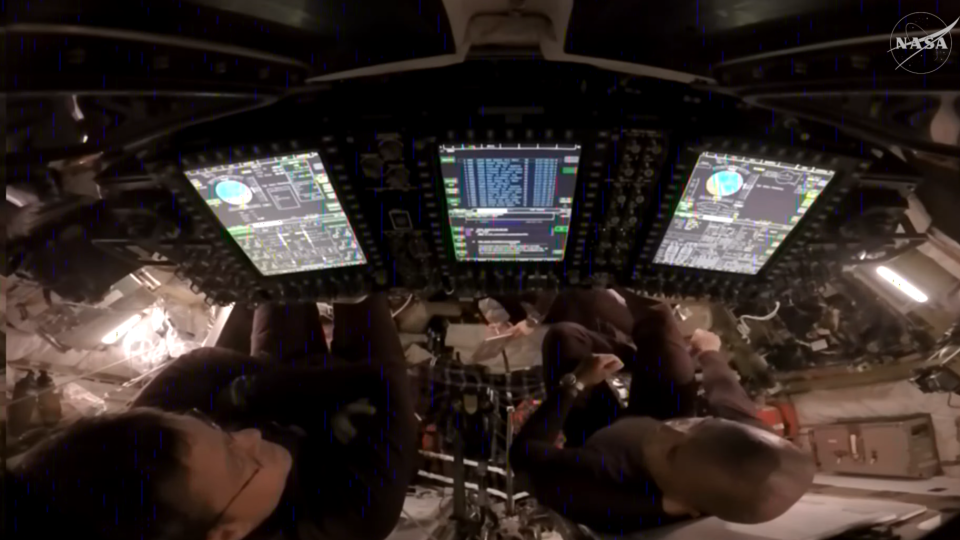
A view of the crew

Here’s our first glimpse of the crew from inside Orion’s cockpit today, with commander Reid Wiseman and pilot Victor Glover reviewing timeline parameters and some of the systems status boards on the flight deck.

Ben Turner
Oops
Burn coming up
Patrick Pester
Did they really see green on the moon?

During a 7-hour lunar flyby earlier this week, Artemis II crewmembers called out their observations of the moon’s surface while simultaneously photographing it — giving members of the science team back on Earth a minute-by-minute account of the rare research expedition.
Several observations already stand out, according to Gordon Osinski, a crater specialist and lunar geologist who helped train the Artemis II astronauts on what to look for.
Besides seeing at least five impact flashes — bright bursts of light from space rocks pummelling the lunar surface — the crew also reported seeing patches of green and brown colorations on the moon.
“We do know there is color on the lunar surface,” Osinski told Live Science contributor Elizabeth Howell in an interview.
What those patches signify, geologically, needs further investigation when the crew arrives home.
But this much is clear, Osinski said: The human eye is more sensitive to color than the cameras on board Artemis II, underscoring the importance of sending trained humans on scientific space missions rather than just relying on machines.
Read the full story here.

Brandon Specktor
Here wee go
One of them involves the stowing of the collapsable contingency urinal (CCU) — a container used on Artemis II after the notorious malfunction of their space toilet.
Christina Koch has told Mahaffey that the CCU is now stowed and sealed inside two ziploc bags.
“We feel that’s unaccessible now,” Koch said. “And we’d like to keep it in that config.”
Moonshots
Image 1 of 6
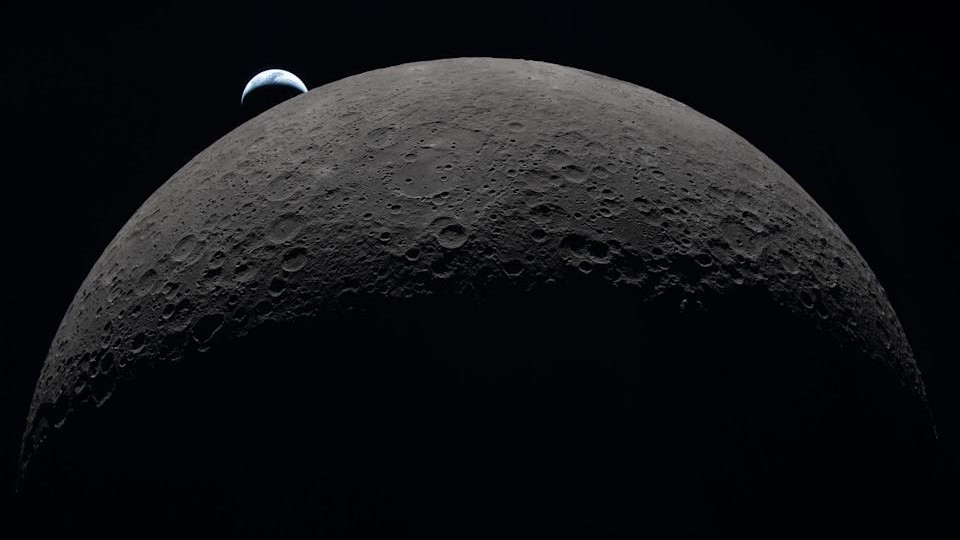
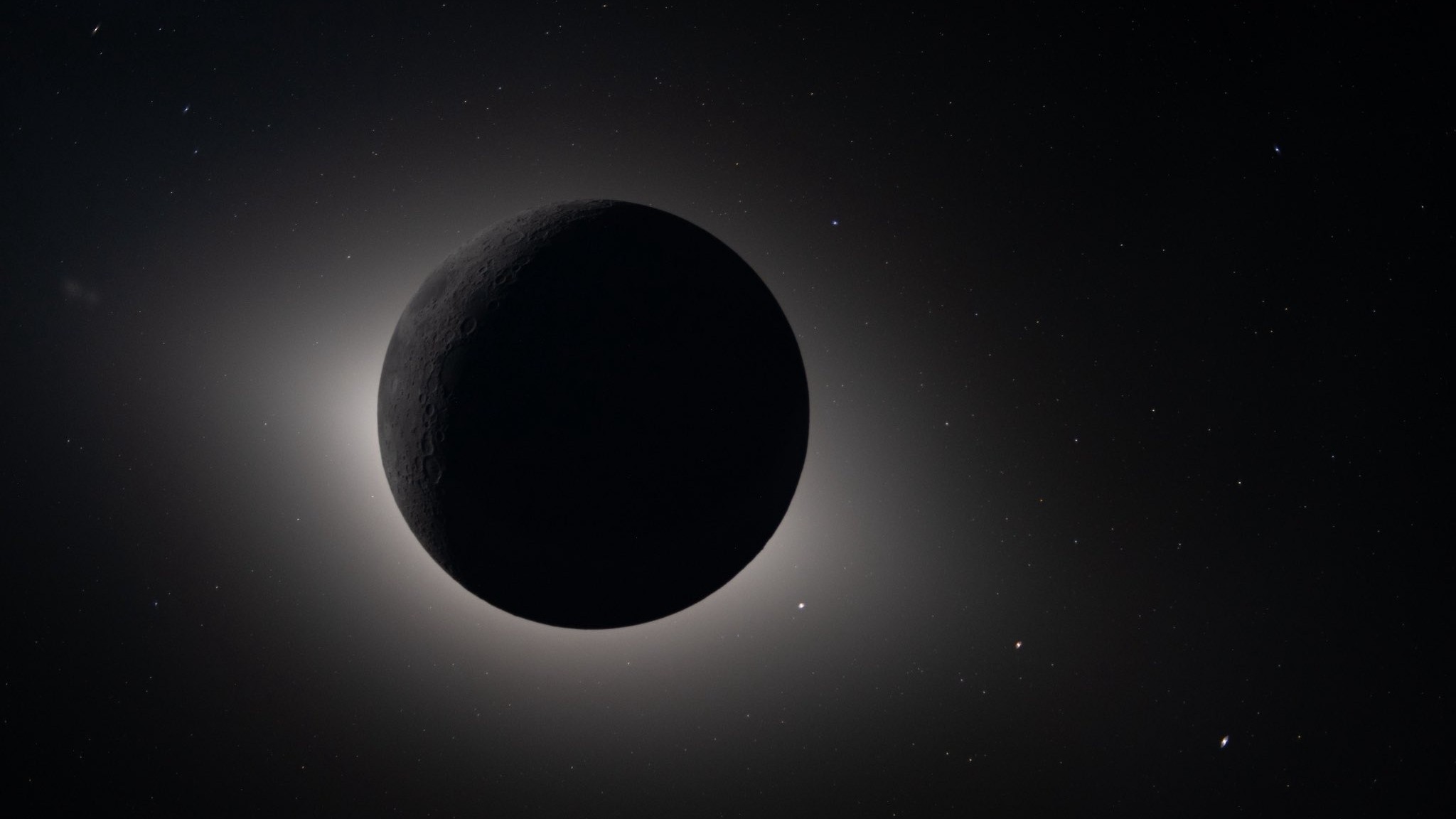
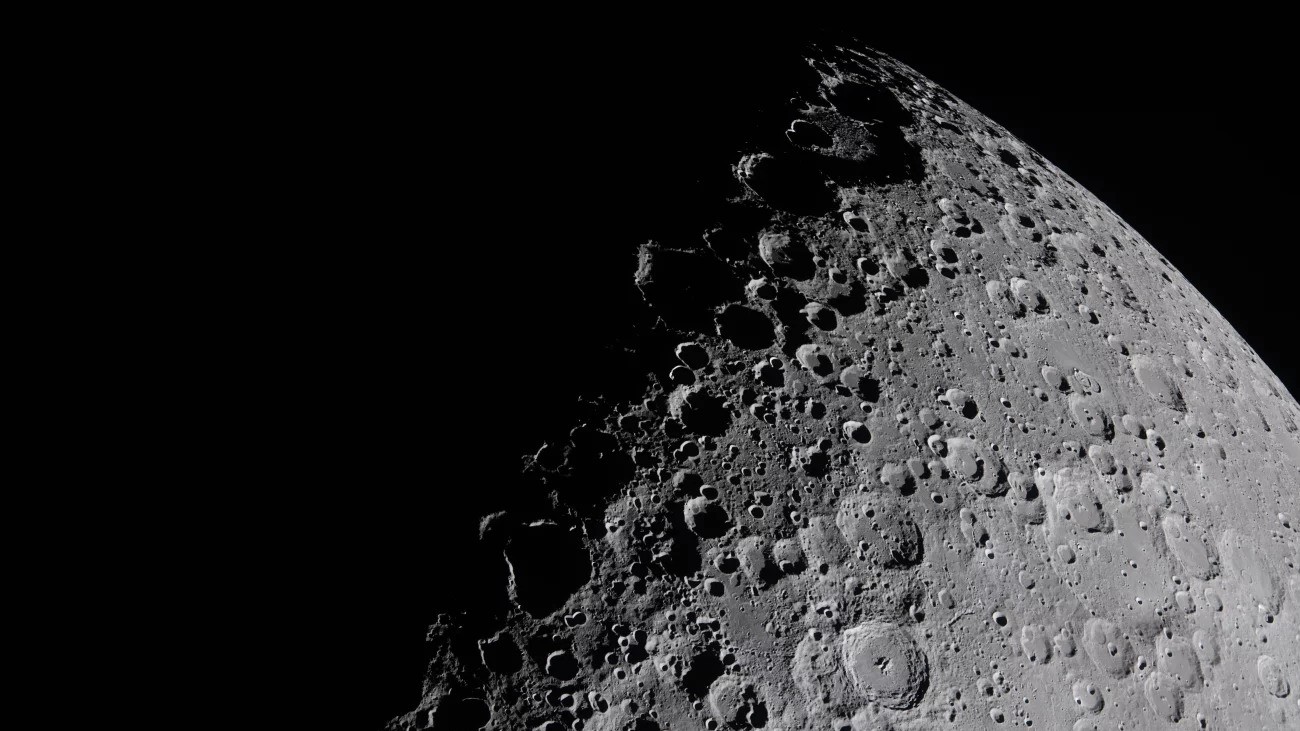
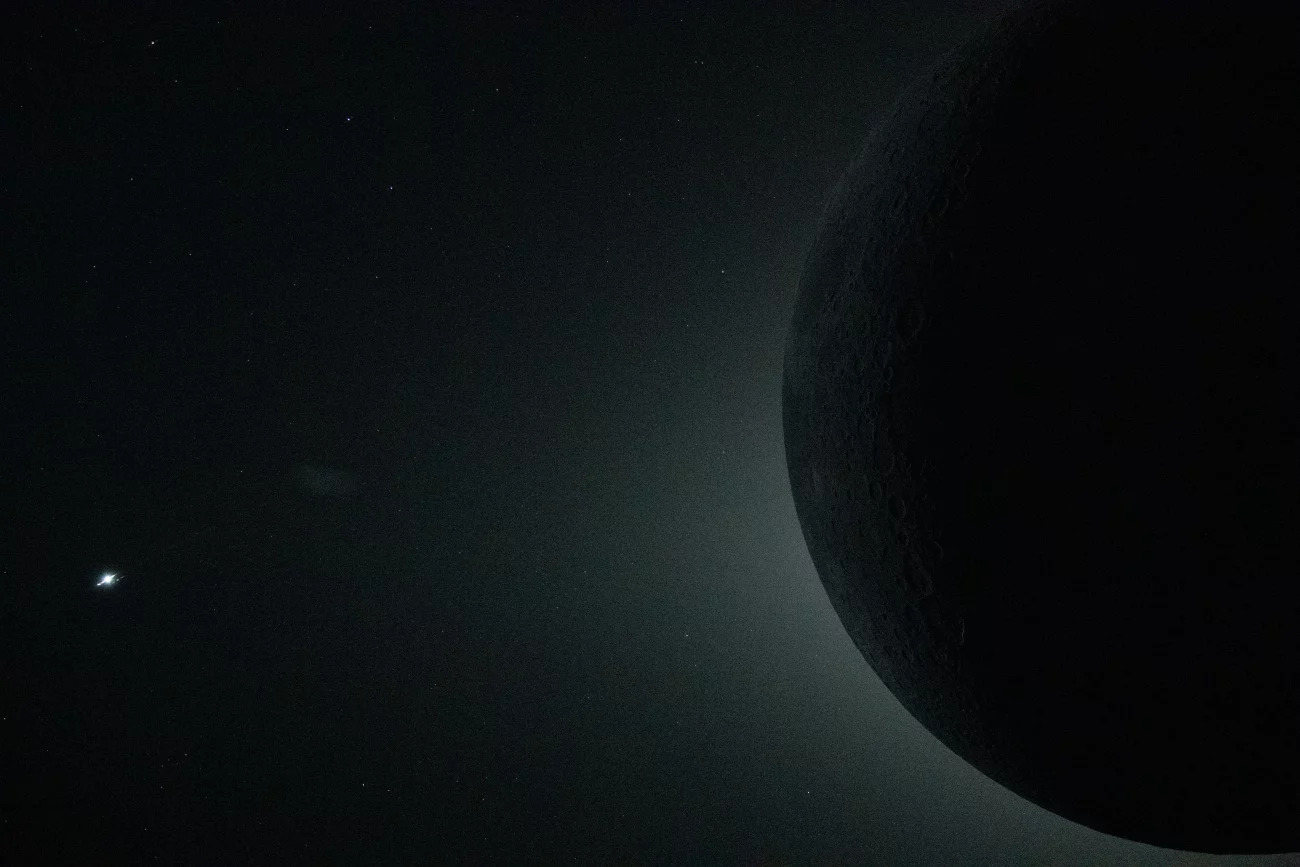
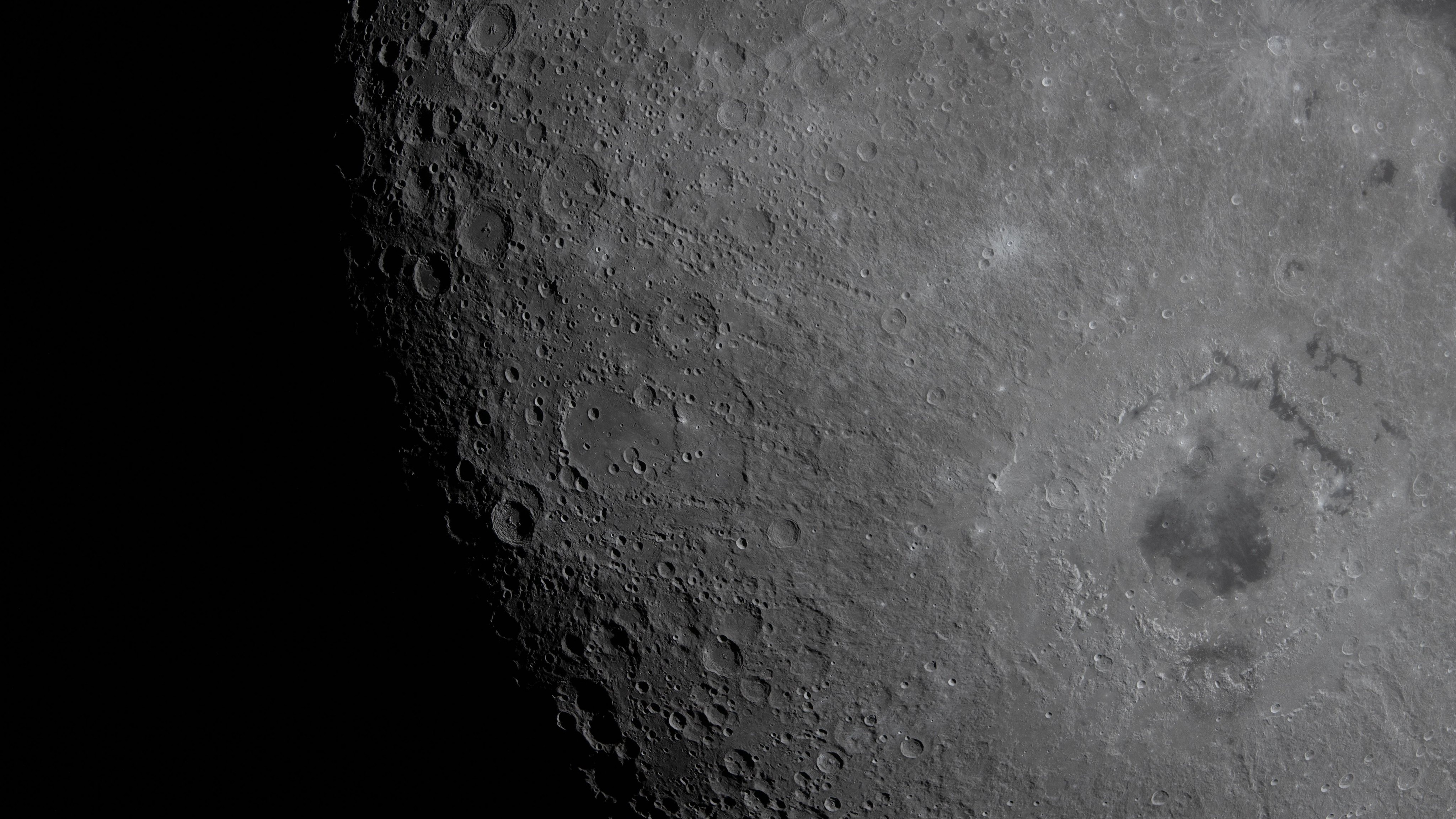
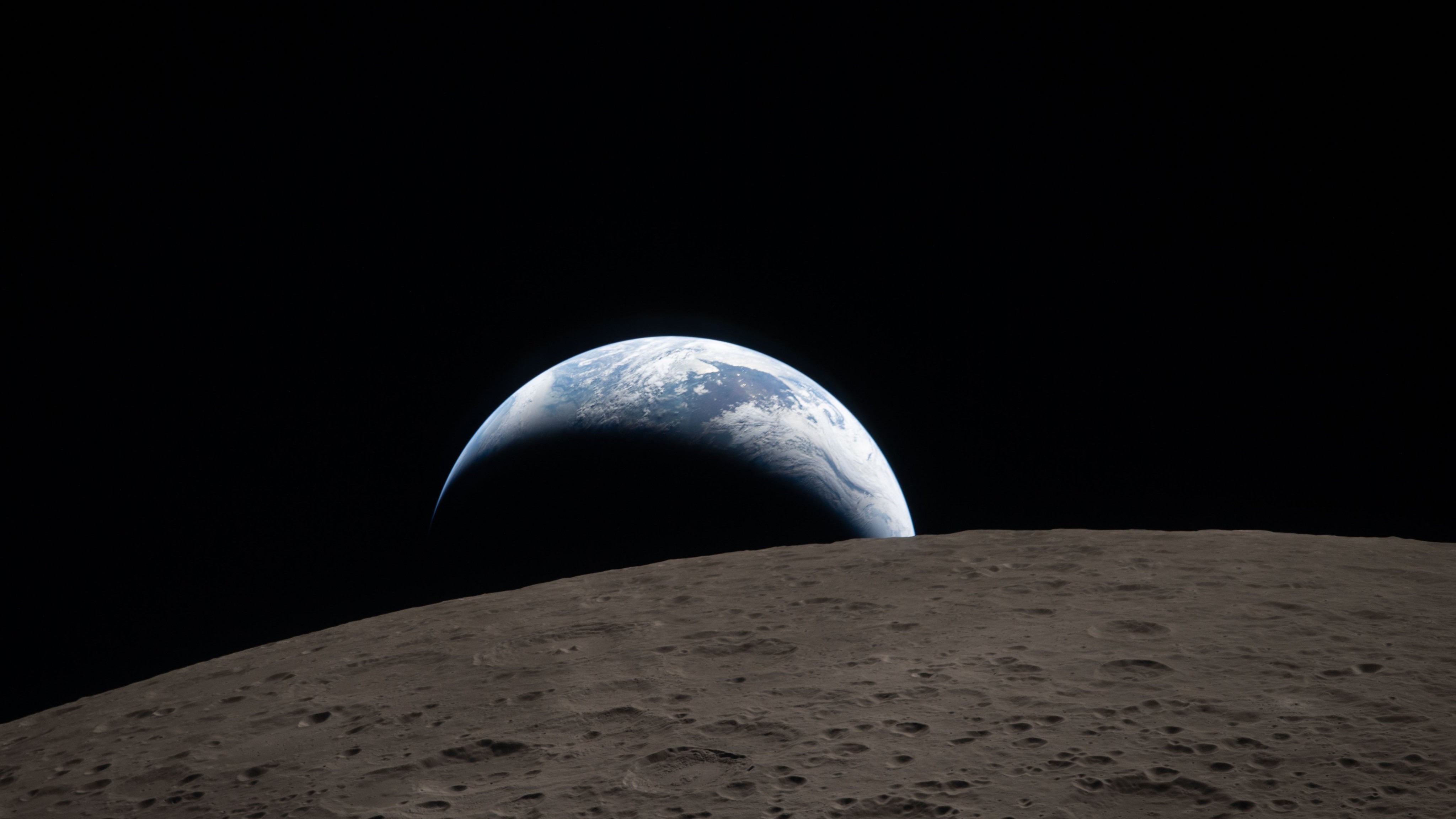
If you want to take a closer look, or learn about these shots in more detail, check out my story on them here.
Ben Turner
Artemis II’s trajectory was modeled off Apollo 13’s

There’s something delightfully poetic about how Artemis, the twin sister of Apollo in Greek mythology, is on a trajectory modeled after the Apollo 13 mission.
The path around the moon and back to Earth is a free-return path, meaning the Orion spacecraft uses both the moon’s and Earth’s natural orbits to maximize efficiency.
And that’s not just to save fuel — this is the same basic lifesaving geometry that helped Apollo 13 make it home after an on-board explosion sent its mission very off-script (we have this mission to thank for the phrase “Houston, we have a problem”).
That means that if anything had gone wrong with Artemis II’s thrusters, it would have been much less of a problem, Houston.
Kenna Hughes-Castleberry
Where we’re at so far

Rob Navias back with another fetching telemetry visualization for the Orion capsule Integrity.
From launch to splashdown, the mission will have logged a total distance of 694,481 miles (1,117,659 kilometers), Navias noted.
Ben Turner
‘Reasons to be confident’ about heat shield

Yesterday, I reported on the issue with Orion’s heat shield. The heat shield will be essential for bringing the astronauts home safely today, but some experts are concerned about how it will perform.
NASA used essentially the same heat shield for the uncrewed Artemis I mission in 2022, and that one suffered much more than expected. As a result, the space agency has opted to adjust the reentry path for Artemis II to mitigate risks to the heat shield.
To learn a bit more about how the shield will hold up today, I spoke with Ed Macaulay, a lecturer in physics and data science at Queen Mary University of London who recently wrote about heat shield safety concerns in The Conversation. You can read the interview here.
Patrick Pester
How can the crew steer to the landing site?

As Orion falls back to Earth, the crew is not flying the capsule the same way a pilot would fly an airplane.
Instead, the spacecraft uses a combination of onboard guidance and thrusters to control where it lands. The crew can monitor the process and step in if needed, but most of the work for landing is done by the spacecraft’s guidance and control system. Small thrusters can help orient Orion during re-entry, making sure the heat shield stays properly positioned and the capsule follows the right path down to Earth.
According to NASA,when Orion hits the upper atmosphere just over Hawaii at around 7:37 p.m EDT, it will begin the final trajectory‑adjustment burn that fine-tunes its position to follow the proper flight path.
After that, the spacecraft will begin a series of roll maneuvers to safely separate itself from the other falling hardware due to the service module separating only moments earlier. It’s at this point that Orion will reach that maximum velocity of 23,864 mph (38,405 kph).
Kenna Hughes-Castleberry
“The stage is set”
Meanwhile, in the flight control room, a shift handover is taking place, with entry controllers led by flight director Rick Henfling stepping in.
“The vehicle is in great shape, and the weather in the splashdown zone couldn’t be better,” Navias added. “Winds are forecast to be 10 knots at splashdown. Wave heights less than four feet, and the wave periodics against the capsule as it bobs in the Pacific Ocean [will be] about 17 seconds.
“We are expecting a few broken and scattered clouds, but that is not an issue,” he concluded. “Integrity is coming home through the law of orbital mechanics.”
Ben Turner
Where are the Artemis II crew landing?

If you live near San Diego, California, you could consider waving at Orion as it hurtles toward the Pacific Ocean at the crazy fast speed of 11 km/s (40,000 km/h) or 24,606 mph.
According to NASA, the splashdown is scheduled for 8:07 p.m. EDT (0007 GMT on April 11), with the capsule landing around 2,000 miles (3,200 kilometers) southwest of San Diego.
This is generally the same landing site as the 2022 Artemis I mission and a strategic choice for NASA, as the area hosts a naval base for the Pacific Fleet Surface Navy. And it will be a Navy ship (the USS John Murtha from Naval Base San Diego) which has the privilege of picking up the four astronauts after they land back on Earth.
Kenna Hughes-Castleberry
Rise and shine, Integrity

Watch On
And then the Zac Brown Band:
With a special pre-recorded message from Zac from the Zac Brown Band: “Just want to say how proud of you we are. It takes courage and grit and freedom to chase the unknown. It’s the purest kind of American spirit. Millions back home are looking up and feeling more inspired because of you. Keep flying strong. Keep flying safe. Can’t wait to welcome you home.”
“What a great way to start the day, Houston,” said Artemis II commander Reid Wiseman. “Courage and grit. That’ll stick with me and it should stick with all of you all day long.”
“We got it loud and clear, Integrity,” said mission control. “Can’t wait to see you run to the water. See you soon. Good morning.”
Ben Turner
What’s next on the Artemis playlist?
Kenna Hughes-Castleberry
It’s nearly wake-up time
The view from Integrity

And here’s the view from Integrity’s solar array wing camera.
“The Earth will grow larger and larger in the field of view as we continue to move throughout the day,” Navias said.
Yeah, we get that bit, Rob.
NASA coverage begins

Rob Navias has appeared on NASA’s livestream to kick off the agency’s live coverage of the landing, and has also shared a handy visualization of where Orion is currently at.
“As you can see from this computer generated graphic based on real time telemetry, we are currently just 67,000 miles from the Earth,” Navias said. “We passed the halfway mark last night between the Earth and the Moon, and are 186,000 miles from the moon as we close in on the planet Earth.”
What does it feel like to disappear behind the moon?

The “overview effect,” is a term invented by the science philosopher Frank White to describe the shift in perspective humans feel when they see Earth from space — especially how small and vulnerable our patch of cosmic oasis appears against the uninhabitable and vast backdrop that surrounds it.
When asked what it felt like to disappear behind the moon and lose radio contact with Earth, Artemis II pilot Victor Glover expressed a similar sentiment.
“I took a brief moment to say a short prayer of gratitude for being sent on this mission and trusted with bringing back scientifically relevant information,” Glover said. “And I also just felt like I was hoping that people looked up and were watching to see when we came back into communication, and that maybe there was a chance that folks would feel a sense of togetherness.”
“We have a moment of silence whenever something solemn [occurs] that requires reverence, or someone that we love has passed away, but maybe we could call it a moment of togetherness,” he added. “And really was hoping that while we were waiting to get back in contact, that people could just feel that sense of togetherness, that we were all a crew on spaceship Earth.”
Artemis II — The Movie?

During the same in-flight news conference, the astronauts were also asked who they would want to play them in a movie.
“We’ve thought a little about the movie, and I think that’s way out of our pay grade,” Reid Wiseman said. “But one thing we do know for sure is that this guy [pointing at Canadian Space Agency astronaut Jeremy Hansen] is gonna be played by Buzz Lightyear. 100%. No doubt.”
I can see the likeness. But Wiseman knows Buzz Lightyear isn’t a real guy, right? Or what are they hiding from us?
The crew’s final reflections on their mission
While we can’t exactly give you the inside story on the contents of the crews’ dreams right now, we can at least tell you some of their reflections upon their historic journey before they went to bed.
When asked what they would tell their younger selves about what they’re doing right now, Christina Koch recalled a family vacation she took to Kennedy Space Centre at age 10.
“If I could have told that little girl who took home a picture of Earthrise, and hung it in her room, that she would eventually launch from that same place, to see that same view, I’m pretty sure she would not believe it,” Koch said. “But even though I still can’t believe it, and she certainly wouldn’t believe it, she chased that dream, and it ended up happening.”
“It’s such an honour to hear that we’ve inspired, that’s truly one of the top things we ever wanted to do,” she concluded.
What are the Artemis II astronauts doing right now?
3:05 a.m.: Crew sleep begins
11:35 a.m.: Flight Day 10 crew wakeup
1:50 p.m.: Orion cabin configuration for re-entry begins
2:53 p.m.: Return trajectory correction burn
6:30 p.m.: NASA+ coverage begins
7:33 p.m.: Crew module and service module separation
7:37 p.m.: Crew module raise burn
7:53 p.m.: Entry interface
8:07 p.m.: Splashdown in the Pacific Ocean
10:30 p.m.: Post-splashdown news conference at NASA Johnson Space Center
Ben Turner
What time is splashdown?
Patrick Pester
So what about the parachutes?

The heat shield’s durability is certainly the big question today, but what about those parachutes Ben just mentioned?
The Orion spacecraft is fitted with 11 total parachutes, all deployed in a very specific sequence to slow, stabilize and safely lower the capsule into the ocean. They includes three forward bay cover parachutes, two drogue parachutes, three pilot parachutes and three main parachutes.
The most iconic of these are the three main parachutes, which span 116 feet (35 meters) in diameter, weigh 300 pounds (136 kilograms) and consist of 10,000 square feet of fabric each.
Reentry will see the crew enter into a six-minute radio blackout caused by a buildup of superhot plasma surrounding the capsule. After this, NASA will first deploy the two drogue parachutes at an alitude of around 6.7 kilometers (22,000 feet). Then, at around 1.8 km (6,000 ft), the three main chutes will be released, slowing the Orion capsule to a leisurely 20 mile per hour (32 kilometers per hour) descent to splashdown.
Kenna Hughes-Castleberry
Feeling the heat

The speed at which the Artemis II crew will return to Earth is set to be record-breaking — hitting the top of the atmosphere at around 25,000 miles per hour (40,000 kilometers per hour).
To dissipate all that energy and arrive at a much more reasonable 20 mph (32 kph) splashdown in the Pacific Ocean off San Diego, the Orion capsule will use two key pieces of technology: parachutes and a heat shield.
Artemis II’s heat shield is designed to protect the crew and slow their capsule by heating up to temperatures of around 2,800 degrees Celsius (5,000 degrees Fahrenheit). Yet it has a problem: It is almost exactly the same as Artemis I’s heat shield, and that infamously cracked upon reentry.
That will make this coming stage of the mission among the most dangerous.
But while they have confessed to harboring “irrational” doubts, NASA officials have said they’re not worried. Why? Check out Patrick’s story here for the full answer.
What goes up

Good morning, science fans! We’re back to cover the nail-biting final stage of the Artemis II mission, which has seen a four-astronaut crew embark on a 685,000-mile (1.1 million kilometers) 10-day journey around the moon and back.
The crew — consisting of commander Reid Wiseman, pilot Victor Glover, and mission specialists Christina Koch and Jeremy Hansen — have captivated millions around the world with their voyage, beaming back stunning images, scientific insights, laughter and some tears as they made history and laid the groundwork for humanity’s return to the moon.
Now all they have to do is return home safely.
With their reentry at record-breaking speeds through Earth’s atmosphere just hours away, Live Science will be following every moment of this perilous finale to their journey, bringing you breaking updates and expert commentary. Let’s see them home.
Ben Turner
You must confirm your public display name before commenting
Please logout and then login again, you will then be prompted to enter your display name.
