
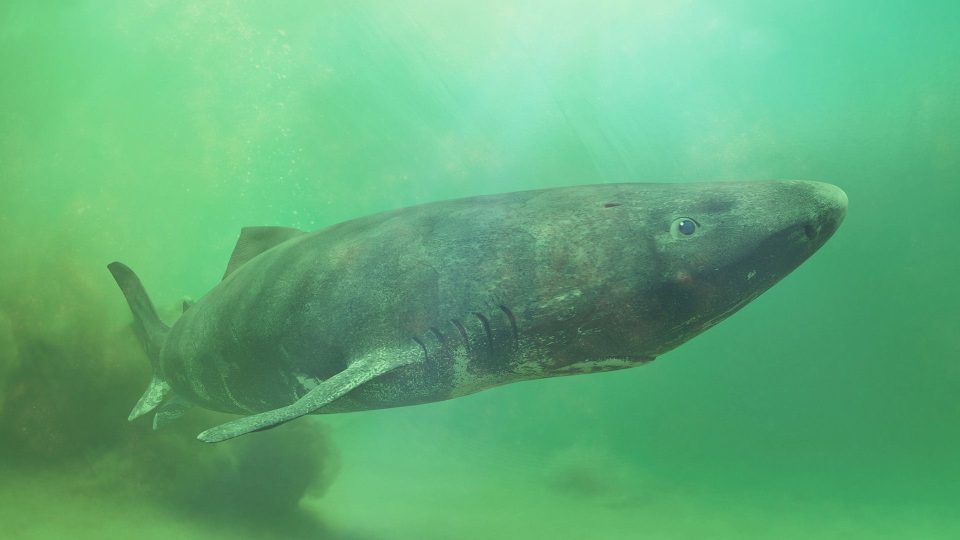
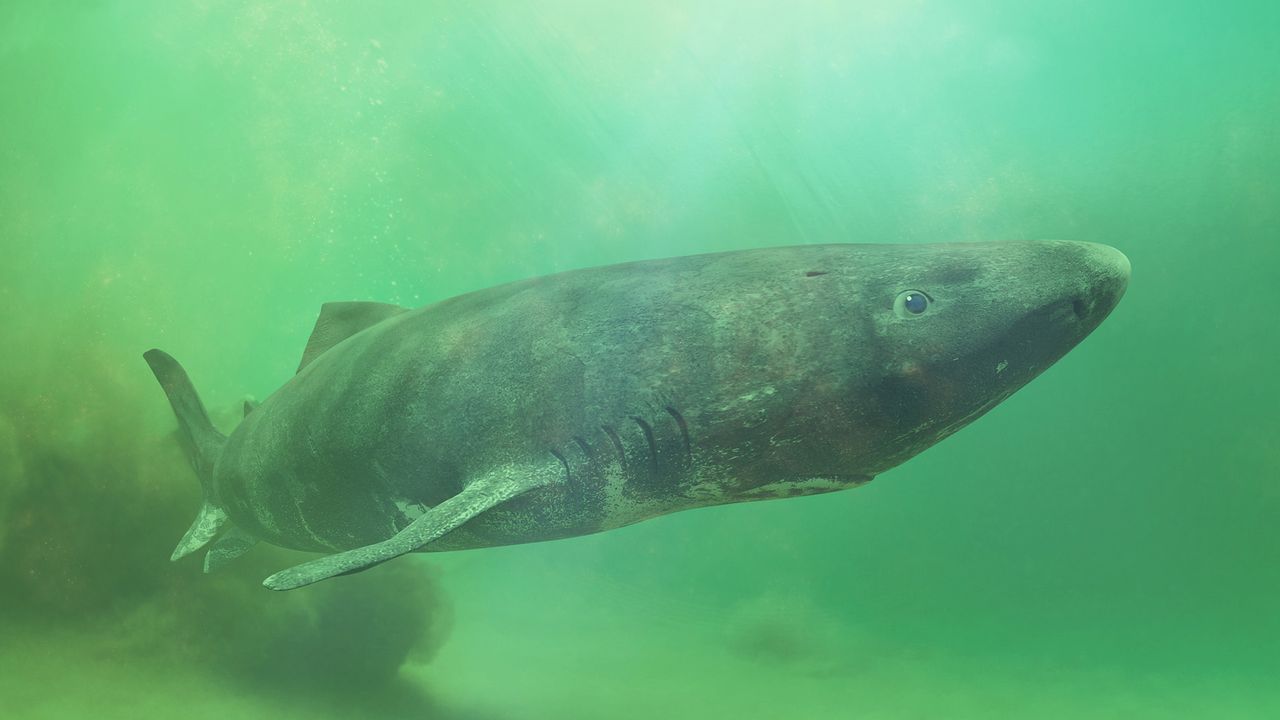
The first-ever whole-genome sequence of a Greenland shark has revealed genetic clues to how the animals avoid cancer and live for hundreds of years. The work may pave the way to a better understanding of age-related diseases in humans.
Greenland sharks (Somniosus microcephalus) typically grow to about 13 to 16 feet (4 to 5 meters) and live long lives in the North Atlantic and Arctic oceans. Little is known about these sharks, partly because they live at depths of up to 1.65 miles (2.65 kilometers). They are estimated to live to about 400 years and don’t reach maturity until they’re about 150 years old, making them the longest-living vertebrates in the world.
